
Is Cetearyl Alcohol Comedogenic? The Truth About This Common Ingredient
Learn the truth about cetearyl alcohol - a commonly misunderstood skincare ingredient. Find out its comedogenic rating and whether you should avoid it.
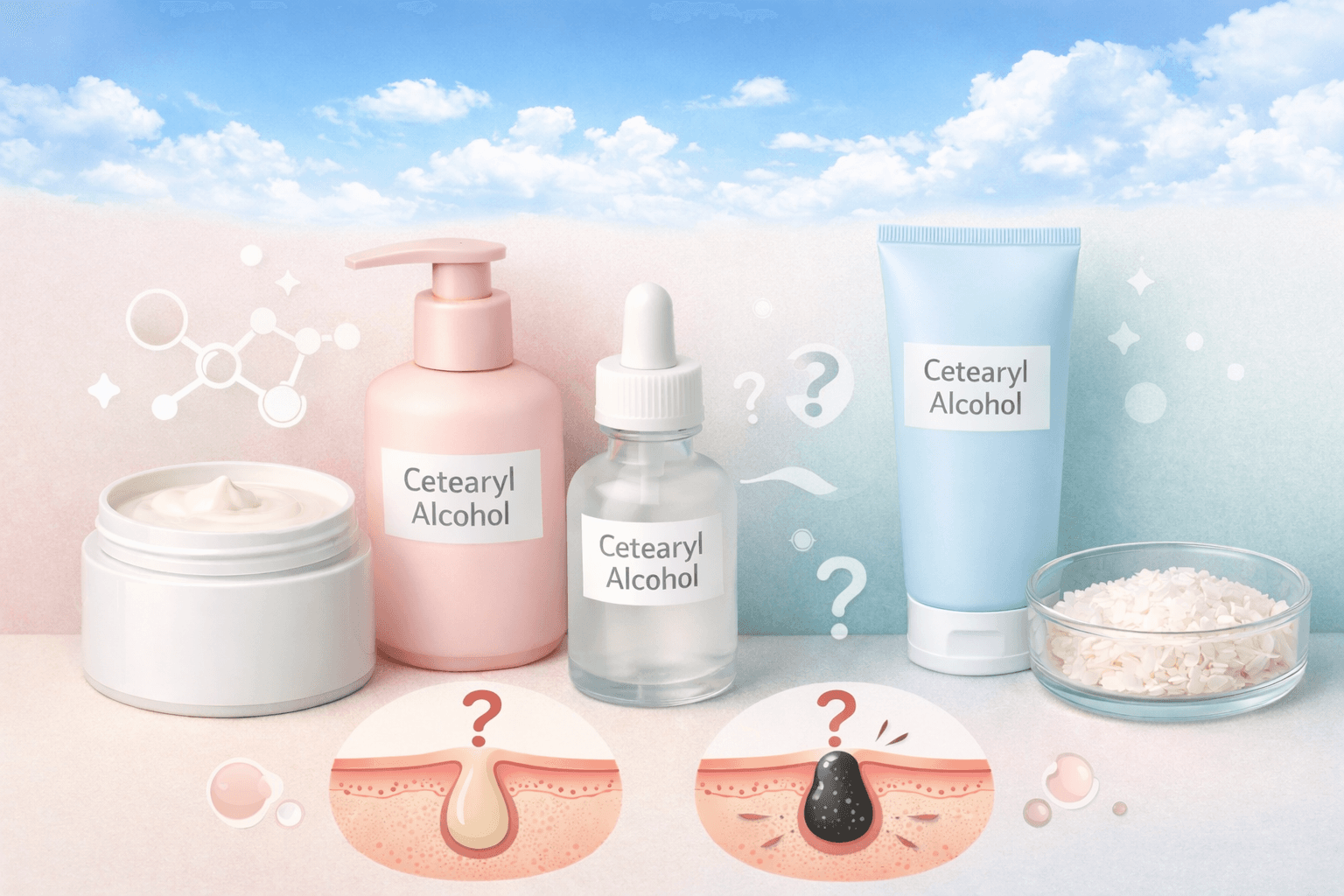
If you have acne-prone or sensitive skin, you have probably spent hours scrutinizing ingredient lists. One ingredient that often causes confusion is cetearyl alcohol. The word "alcohol" immediately raises red flags for many skincare enthusiasts, but is this concern justified?
In this comprehensive guide, we will break down everything you need to know about cetearyl alcohol, its comedogenic rating, and whether you should avoid it in your skincare routine.
What is Cetearyl Alcohol?
Cetearyl alcohol is a fatty alcohol derived from natural fats and oils, typically coconut or palm oil. It is a mixture of cetyl alcohol and stearyl alcohol, both of which are long-chain fatty alcohols.
Unlike the drying alcohols you might be familiar with (like ethanol, isopropyl alcohol, or denatured alcohol), fatty alcohols behave completely differently on the skin. While drying alcohols evaporate quickly and can strip your skin of moisture, fatty alcohols actually help retain moisture and improve product texture.
Common Names and Synonyms
You might see cetearyl alcohol listed under different names on ingredient labels:
- Cetostearyl alcohol
- Cetyl/stearyl alcohol
- C16-18 alcohol
- Ceteryl alcohol (misspelling)
Cetearyl Alcohol Comedogenic Rating
The comedogenic scale ranges from 0 to 5, where:
| Rating | Meaning |
|---|---|
| 0 | Will not clog pores |
| 1 | Very low likelihood |
| 2 | Moderately low likelihood |
| 3 | Moderate likelihood |
| 4 | Fairly high likelihood |
| 5 | High likelihood of clogging pores |
Cetearyl alcohol has a comedogenic rating of 2 out of 5.
This means it has a relatively low likelihood of clogging pores. For the vast majority of people, including those with acne-prone skin, cetearyl alcohol is considered safe to use.
However, it is important to understand that comedogenic ratings are not absolute. They are based on studies that tested concentrated ingredients on rabbit ears in the 1970s and 1980s. In real-world formulations, ingredients interact with each other, and the final product may behave differently than individual ingredients tested in isolation.
Why is Cetearyl Alcohol in Your Products?
Cetearyl alcohol is one of the most versatile ingredients in cosmetic formulation. Here is why formulators love it:
1. Emulsifier
Oil and water do not mix naturally. Cetearyl alcohol helps bind these two phases together, creating stable, uniform products like lotions and creams. Without emulsifiers, your moisturizer would separate into layers.
2. Thickener
It gives products that rich, luxurious, creamy texture that consumers love. Without thickeners, many products would be too runny to apply effectively.
3. Emollient
Cetearyl alcohol helps soften and smooth the skin by filling in the gaps between skin cells. This creates a protective barrier that prevents moisture loss.
4. Stabilizer
It helps maintain the consistency and shelf life of products, ensuring they remain effective from the first use to the last.
5. Foam Booster
In cleansers and shampoos, cetearyl alcohol can help create a richer, more stable foam.
Products That Commonly Contain Cetearyl Alcohol
You will find cetearyl alcohol in a wide range of products:
- Moisturizers and lotions - Provides texture and emollient properties
- Conditioners - Helps detangle and soften hair
- Sunscreens - Stabilizes the formula
- Foundations and primers - Creates smooth application
- Body creams - Adds richness and moisture
- Leave-in treatments - Provides conditioning without heaviness
Many dermatologist-recommended brands like CeraVe, Cetaphil, La Roche-Posay, and Vanicream use cetearyl alcohol in their formulations.
Cetearyl Alcohol vs. Other Alcohols in Skincare
Not all alcohols are created equal. Here is how cetearyl alcohol compares to other common alcohols in skincare:
| Alcohol Type | Category | Effect on Skin | Comedogenic Rating |
|---|---|---|---|
| Cetearyl alcohol | Fatty alcohol | Moisturizing, emollient | 2 |
| Cetyl alcohol | Fatty alcohol | Moisturizing, emollient | 2 |
| Stearyl alcohol | Fatty alcohol | Moisturizing, emollient | 2 |
| Ethanol | Simple alcohol | Drying, can irritate | 0 |
| Isopropyl alcohol | Simple alcohol | Very drying, irritating | 0 |
| Denatured alcohol | Simple alcohol | Drying, can irritate | 0 |
| Benzyl alcohol | Aromatic alcohol | Preservative, can irritate | 0 |
The key takeaway: fatty alcohols moisturize, simple alcohols dry out the skin.
Should You Avoid Cetearyl Alcohol?
For Most People: No
Cetearyl alcohol is generally well-tolerated and is found in countless products recommended by dermatologists. Its low comedogenic rating and beneficial properties make it suitable for most skin types, including:
- Normal skin
- Dry skin
- Combination skin
- Most acne-prone skin
- Mature skin
When You Might Want to Avoid It
There are some specific situations where you might consider avoiding cetearyl alcohol:
-
Known sensitivity: If you have previously reacted to products containing cetearyl alcohol, you may have a sensitivity to fatty alcohols.
-
Fungal acne (Malassezia folliculitis): Some people with fungal acne find that fatty alcohols can feed the yeast that causes their condition. If you suspect fungal acne, consult a dermatologist.
-
Extremely reactive skin: If your skin reacts to almost everything, you might benefit from a minimal routine that excludes all potential irritants.
-
Contact dermatitis history: In rare cases, cetearyl alcohol can cause allergic contact dermatitis. This is uncommon but possible.
How to Test If Cetearyl Alcohol Works for You
If you are unsure whether your skin tolerates cetearyl alcohol, follow these steps:
-
Patch test: Apply a small amount of the product to your inner forearm or behind your ear. Wait 24-48 hours for any reaction.
-
Introduce slowly: Start using the product every other day, then gradually increase frequency.
-
Monitor your skin: Keep track of any changes in your skin condition. Take photos to objectively assess progress.
-
Isolate variables: When testing a new product, do not introduce other new products at the same time.
Frequently Asked Questions
Is cetearyl alcohol natural?
Yes, cetearyl alcohol is derived from natural sources, typically coconut oil or palm oil. It undergoes processing but is considered a naturally-derived ingredient.
Is cetearyl alcohol vegan?
Usually yes. While it can technically be derived from animal fats, most cosmetic-grade cetearyl alcohol comes from plant sources. Check with the manufacturer if this is important to you.
Can cetearyl alcohol cause acne?
For most people, no. Its comedogenic rating of 2 means it has a low likelihood of causing breakouts. However, individual reactions vary, and some people may be sensitive to it.
Is cetearyl alcohol safe for sensitive skin?
Generally yes. Cetearyl alcohol is considered gentle and is often included in products marketed for sensitive skin. However, if you have extremely reactive skin, patch testing is recommended.
Does cetearyl alcohol dry out skin?
No, the opposite is true. Cetearyl alcohol is an emollient that helps moisturize and soften skin. It is completely different from drying alcohols like ethanol.
Is cetearyl alcohol the same as isopropyl alcohol?
No. Isopropyl alcohol is a simple, drying alcohol that evaporates quickly and can irritate skin. Cetearyl alcohol is a fatty alcohol that moisturizes and conditions skin.
The Bottom Line
Cetearyl alcohol is a misunderstood ingredient that deserves a better reputation. Despite having "alcohol" in its name, it is nothing like the drying alcohols that can irritate your skin. With a comedogenic rating of just 2 out of 5, it is safe for most skin types, including acne-prone skin.
This fatty alcohol serves essential functions in skincare formulations: it helps products feel luxurious, keeps formulas stable, and actually helps your skin retain moisture. You will find it in products from the most trusted dermatologist-recommended brands.
Unless you have a known sensitivity to fatty alcohols or are dealing with fungal acne, there is no need to avoid cetearyl alcohol. Focus instead on the overall formulation and how your skin responds to complete products.
Want to check if your products contain cetearyl alcohol or other ingredients you are curious about? Use SCRNE to instantly scan any ingredient list and get detailed information about each ingredient, including comedogenic ratings and potential concerns for your skin type.
Sources
-
Fiume, M. M., et al. "Safety Assessment of Fatty Alcohols as Used in Cosmetics." International Journal of Toxicology, vol. 38, no. 3_suppl, 2019, pp. 17S-41S. PubMed
-
Draelos, Z. D. "The science behind skin care: Moisturizers." Journal of Cosmetic Dermatology, vol. 17, no. 2, 2018, pp. 138-144.
-
Cosmetic Ingredient Review (CIR). "Final Report on the Safety Assessment of Cetearyl Alcohol." CIR Expert Panel
-
Fulton, J. E., et al. "Comedogenicity of current therapeutic products, cosmetics, and ingredients in the rabbit ear." Journal of the American Academy of Dermatology, vol. 10, no. 1, 1984, pp. 96-105. PubMed
-
American Academy of Dermatology. "How to Control Oily Skin." AAD.org